
LANE COUNTY, Ore. — June 29, 2026— As we look back on the past several months, the Lane County Wildfire Season 2026 stands out as a defining period for our community. With predictions of above-normal danger coming to fruition, residents and officials across Eugene, Springfield, and the outlying areas worked tirelessly to navigate the risks. From the dense forests near theMountain Biking the Mc Kenzie River Trailto the rural interfaces of the Cascades, the threat of fire shaped our summer activities and preparedness efforts.
Forecasting the Lane County Wildfire Season 2026
The season began with concerning data from meteorologists and forestry experts. Oregon experienced a pronounced snow drought, with snowpack levels sitting well below normal averages. This lack of moisture created a tinderbox effect in the forests and grasslands, setting the stage for potential disaster. The National Interagency Fire Center projected that significant wildland fire potential would rise to above-normal levels across the entire state by August 2026. This forecast was not just a number on a chart; it signaled a need for immediate preparation and resource allocation to combat the Lane County Wildfire Season effectively. We watched the weather patterns closely, knowing that our dry forests required extra vigilance.
State Leaders Meet in Springfield
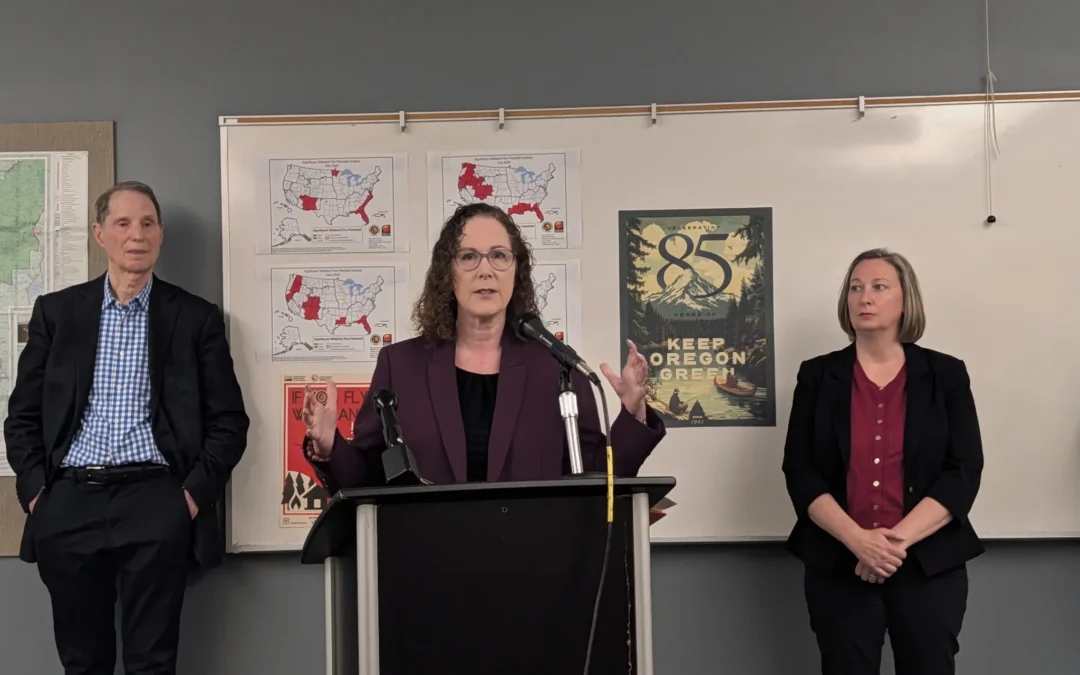
Responding to these grim predictions, key figures gathered on May 7, 2026, at the Springfield Interagency Office. U.S. Sen. Ron Wyden and U.S. Rep. Val Hoyle met with Lane County Commissioner Heather Buch to discuss the upcoming challenges and coordinate strategies. During the meeting, Dave Larson, the southern Oregon area director for the Oregon Department of Forestry, provided a sobering assessment. He stated that “the stage is set for what’s looking like a very critical fire season for the state of Oregon.” This meeting underscored the gravity of the situation and the necessity of coordinated efforts between state, federal, and local agencies to protect our communities.
Business Preparedness During the Lane County Wildfire Season
As the dry season set in, attention turned to the economic sector and the resilience of local commerce. On June 7, 2026, Lane County Community and Economic Development Analyst Samantha Roberts issued a critical advisory. She urged local businesses to prepare for the increased wildfire danger inherent in the Lane County Wildfire Season. The county’s recommendations were practical and actionable: sign up for Lane Alerts emergency texts, clear combustible materials within a five-foot radius of buildings, and review Oregon OSHA wildfire smoke rules.
Businesses were also encouraged to utilize the Red Cross Ready Rating program and the SBA preparedness checklist to ensure continuity. A crucial step was the review of insurance policies to verify coverage for wildfire damage and business interruption. The advisory brought back memories of recent history, specifically when smoke lingered above an Incident Command Post outside ofBiking Oakridge Oregonduring the 2022 Cedar Creek Fire. For many local owners, these preparations were a necessary evolution in how commerce handles environmental threats.
State Funding and Legislative Action
Financial resources were mobilized to support the fight against the flames. House Bill 3940, passed by the legislature in 2025, proved to be a pivotal piece of legislation. It created a new tax on oral nicotine products, directing the generated revenue to the state forestry department. These funds were specifically earmarked for wildfire risk reduction efforts, including prescribed fire operations and landscape restoration projects designed to mitigate fuel loads before they could spark major incidents.
In terms of personnel, the Oregon Department of Forestry committed to maintaining full staffing levels. Approximately 1,200 employees were stationed statewide for the fire season, matching the previous year’s capacity. Additionally, strategic assets were deployed, including a helicopter parked in Creswell. This aircraft was made available to partner agencies, providing a crucial aerial advantage for rapid response during the Lane County Wildfire Season. These resources ensured that when fires ignited, we had the tools to fight back.
Local Fire Protection Grants
Support for rural communities was bolstered by significant grant funding aimed at leveling the playing field for smaller districts. The Oregon State Fire Marshal administered a program that distributed 75 fire engines to rural fire departments throughout Oregon. According to emergency response unit manager Dennis Lee, six of these engines were placed in Lane County, enhancing the local fleet’s capabilities significantly. Furthermore, the 2026 wildfire season staffing grants provided essential financial relief. Eleven grants were awarded to local agencies in Lane County, offering up to $35,000 per agency. This funding was instrumental in securing additional summertime staffing, ensuring that departments nearDorena Lake Oregonand other rural areas had the manpower needed to protect lives and property.
Sources
- Lane County warns businesses to be ready for increased wildfire danger— KLCC
- Oregon wildfire season: Conditions point to ‘brutal summer’— Lookout Eugene-Springfield